

How We Rate Sweepstakes Casinos
Every score on this site comes from documents the operators publish themselves, read in full and dated. We do not register accounts, buy coin packages or request redemptions — and we say so plainly, because a methodology page is the wrong place to describe work that did not happen. What we do instead is narrower and more checkable: we read the official sweepstakes rules and terms where the operator serves them, capture the offer, coin and redemption pages with a date attached, and mark as unverified every figure we could not confirm at the source. This page explains exactly what we measure, how heavily each factor counts, where our data comes from, and the conflicts of interest we are obligated to disclose.
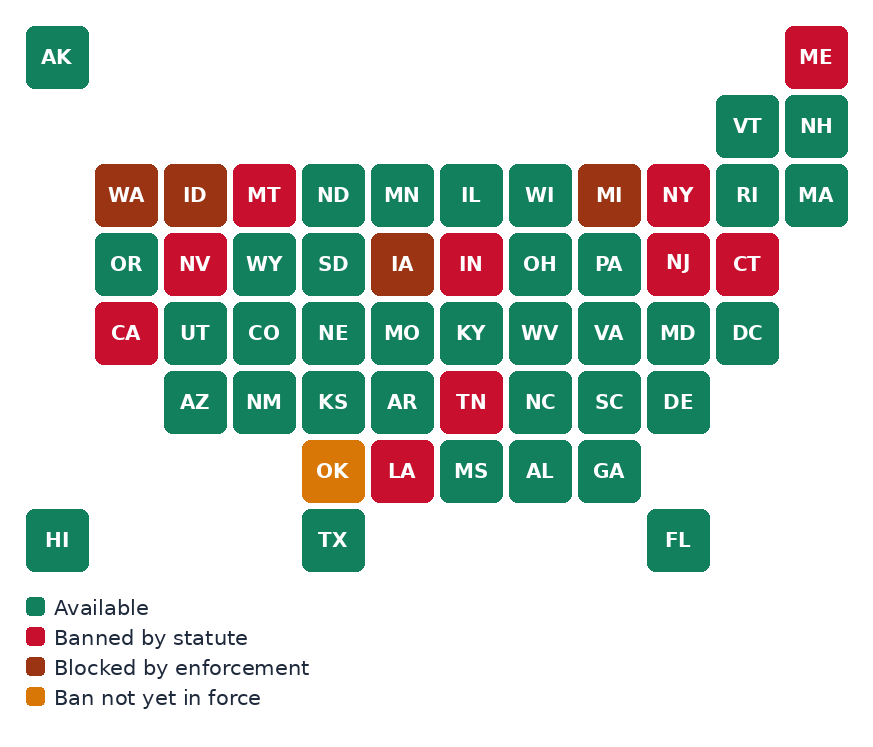
For the model itself, see Sweepstakes Casinos Explained.
Our Scoring Criteria and Weights
Our composite score runs from 0 to 100 and is built from seven weighted categories. The weights reflect what actually affects a player’s experience over months of use, not what looks impressive in a marketing sheet. A site can score well on games and still land mid-table if redemptions are slow or the Sweeps Coins economy is stingy.
| Criterion | Weight | What it measures |
|---|---|---|
| Coin economy & value | 25% | Gold Coin package pricing in USD, how much bonus Sweeps Coins accompanies each purchase, daily login and social-media SC drops, and the realistic cost of sustained play. |
| Redemption experience | 20% | Minimum SC redemption threshold, verification turnaround, prize-award speed, and whether stated timelines match what we observe on a live account. |
| Game library & software | 15% | Total title count, named studio partners, exclusive in-house content, table and live-dealer formats, and how the catalog performs on mobile. |
| Legal clarity & state eligibility | 15% | How plainly the operator states which states it serves, whether the no-purchase-necessary path is easy to find, and the quality of its official sweepstakes rules. |
| Account safety & data handling | 10% | Encryption, identity-verification process, 21+ age gating where applied, and the clarity of the privacy policy. |
| Customer support | 10% | Which channels the operator publishes (live chat, email, hours), how easy they are to find, and whether the site documents what support can actually resolve. We do not contact support, so no response time here is ours. |
| Responsible play tools | 5% | Self-exclusion, play limits, session reminders, cooling-off periods, and visible links to independent help resources. |
Why coin economy carries the most weight
The dual-currency model is the whole product. Gold Coins are for standard play and hold no prize value. Sweeps Coins are the promotional currency that can be redeemed for prizes once eligibility conditions are met — and you never buy them. They arrive free as a bonus attached to Gold Coin purchases, through daily logins, through social giveaways, and through the mail-in alternative method of entry. Because that free-SC flow determines how long an account stays playable, it earns the largest share of our score.
Pro tip: No purchase is ever necessary. Every legitimate operator we cover accepts a postal AMOE request — a handwritten postcard with your name, address, and account details mailed to the address in the official rules — and credits free Sweeps Coins for it. If you cannot locate an operator’s AMOE instructions inside two minutes of searching its terms, that is a scoring penalty in our legal-clarity category, not a minor formatting issue.
How We Collect the Data
We do not score from press releases, and we do not score from other affiliates. Each review
rests on three streams of evidence, and any criterion without a source behind it is published
as unverified rather than guessed at.
1. The operator’s own rules, read in full
The first source is the document the operator is legally required to publish: the official
sweepstakes rules. Where they are served, we read the whole thing — High 5’s ran to
33,000 characters and settled the minimum age, the twenty-one excluded states and the postal
alternative method of entry, including the dates it withdrew from Maine, Indiana and Iowa.
McLuck’s terms of service ran to 78,000 and confirmed the no-purchase-necessary structure in
three separate formulations.
Where they are not served, that is itself the finding. Pulsz returns an application
shell asking you to log in; Crown Coins returns the same 1,242-character page on every rules
path we tried. Those two carry a smaller set of verified facts on this site, and the reviews
say which ones are missing and why.
2. Dated captures of the pages that matter
For each brand we capture the lobby, the coin packages, the promotions page and the
redemption terms, and we keep the capture. Every screenshot on this site carries the month it
was taken, and the figures in the tables are read off those captures rather than off a press
kit. When an operator changes a price or a threshold, the old capture is what lets us say what
it used to be.
3. Measuring the competition, not guessing at it
Before we write, we open the pages currently ranking for the same searches and measure them
from the inside — word count, heading structure, tables, images. Forty pages went into
the current version of this site. That is how we decide what a page here has to cover, instead
of writing to a length that felt right.
What we do not do, stated plainly: we do not open
accounts, we do not fund coin packages, we do not submit redemption requests and we do not
contact operator support. Any timing you see on this site is attributed — either to the
operator’s published figure or to aggregated player reports — and never presented as our
own measurement.
The Scoring Scale and What Each Tier Means
A raw weighted number means little without a plain-English translation. Here is how our bands map to a recommendation.
| Score | Tier | What it signals |
|---|---|---|
| 90–100 | Best in class | Strong free-SC flow, redemption completed faster than the category average, a deep library, and unambiguous legal documentation. Rare — we have issued few of these. |
| 80–89 | Recommended | Reliable across the board with one or two soft spots, typically a high minimum redemption threshold or limited support hours. Safe to play. |
| 70–79 | Solid with caveats | Functional and legitimate, but something material underperforms — thin daily SC, a narrow catalog, or slow verification. Read the caveats before signing up. |
| 60–69 | Mixed | Works, but we found friction serious enough that most players will do better elsewhere. |
| Below 60 | Not recommended | Redemption problems, unclear rules, weak support, or an economy that burns through free Sweeps Coins too fast to sustain play. |
How our current ratings distribute
Our top tier is genuinely narrow. Four brands currently sit at 88 — McLuck (7,500 GC plus 2.5 free SC at signup), Crown Coins Casino (100K CC plus 2 free SC, with a 50 SC minimum redemption), High 5 Casino (250 GC plus 5 free SC, also 50 SC minimum), and Pulsz (5,000 GC plus 2.3 SC).
By contrast, Chumba Casino scores 58 despite a headline 2M GC plus 2 free SC offer, which illustrates the point: a large Gold Coin number tells you nothing about the free Sweeps Coins flow or the redemption experience behind it.
| Operator | Our score | Welcome package | Standout factor |
|---|---|---|---|
| McLuck | 88 | 7,500 GC + 2.5 SC free | 2.5 free SC on signup |
| Crown Coins Casino | 88 | 100K CC + 2 SC free | 50 SC minimum redemption |
| High 5 Casino | 88 | 250 GC + 5 SC free | 50 SC minimum redemption |
| Pulsz | 88 | 5,000 GC + 2.3 SC | 2.3 SC free on signup |
| Chumba Casino | 58 | 2M GC + 2 SC free | 2 SC free on signup |
How Often We Re-Score Every Operator
A score is a snapshot, and sweepstakes sites change faster than most verticals. Coin packages get repriced, redemption minimums move, state eligibility lists shrink or expand after a legislature acts, and game libraries rotate when a studio contract ends. We work on a fixed calendar rather than waiting for something to break.
| Review type | Frequency | What gets re-checked |
|---|---|---|
| Full re-score | Every 6 months | All five criteria, fresh account, new redemption cycle |
| Coin economy audit | Every 90 days | Package pricing, free SC bonus sizing, minimum redemption |
| State eligibility sweep | Monthly | Excluded states, age gate, AMOE availability by state |
| Redemption timing spot-check | Monthly | Approval turnaround on a live prize request |
| Event-driven update | Within 72 hours | Any operator exit, state law change, or terms rewrite |
Event-driven updates override the calendar. When a state attorney general issues guidance, when an operator withdraws from a market, or when the mail-in entry process changes, we re-test that specific criterion and publish the revised score with a dated note. Eligibility statements on our brand pages always come from the operator’s current published terms on the day we check, not from an older draft.
Pro tip: Before you sign up anywhere, open the operator’s sweepstakes rules and find the AMOE clause yourself. No purchase is ever necessary — every legitimate site must offer a free entry route, usually a hand-written mail-in request, and the Sweeps Coins you receive that way carry the exact same redemption value as the ones bundled free with a Gold Coin package. If you cannot find that clause in under two minutes, treat it as a transparency failure.
Who Writes and Reviews Our Ratings
Every rating is produced by a named human against a written rubric, and every page carries a
byline and a date. The chain has two links, not three, and neither of them involves playing at
the sites.
The two-person chain
A writer collects the sources — official rules, terms, dated captures
of the offer and redemption pages — scores each criterion against the weights in the
table above, and writes the review, flagging every figure the operator does not publish.
A compliance reviewer then checks two things independently: that the state
eligibility list matches the operator’s current terms, and that nothing in the copy describes
the model in language that belongs to regulated casinos. That second check exists because the
vocabulary matters legally. Sweepstakes operators do not hold US gaming licences and no federal
or state gaming regulator oversees them — the correct description is that they run
promotional sweepstakes under the sweepstakes and promotions statutes of the states where they
are eligible. Any page here that implies otherwise is a defect and gets corrected.
Affiliate Disclosure and Conflicts of Interest
We earn money. When you follow a link from this site and register with an operator, we may receive a commission from that operator. That revenue pays for the research: reading and archiving the operators’ rules and terms, capturing the offer and redemption pages with dates attached, measuring the pages we compete against, and the editorial time to write it up. It does not pay for accounts or coin purchases, because we do not open accounts or buy coins.
The commercial relationship is deliberately walled off from the scoring. Writers and compliance reviewers are not told what any operator pays, and commission rates are never an input to the rubric described above. The clearest evidence sits in our own table: Chumba Casino scores 58 and remains published at that number, while McLuck, Crown Coins Casino, High 5 Casino, and Pulsz sit at 88. A score that low would be quietly deleted on a site that sold rankings.
What we never do
- We never sell positions. No operator can buy a higher score, a top-of-list slot, or a “recommended” badge. Ordering follows the score.
- We never let an operator preview or edit a review. Brands see our copy when you do.
- We never publish a score from a brochure. If we could not open an account and complete a redemption cycle, we publish no number at all.
- We never bury a downgrade. When a score falls, the brand page keeps a dated line explaining which criterion moved and why.
- We never accept unpaid coin grants for testing. Comped balances distort exactly the thing we weight most heavily.
- We never present sweepstakes play as a regulated alternative. These are promotional games, not licensed gambling products.
The Limits of Our Method
Honest methodology includes what it cannot measure. We do not have visibility into an operator’s internal game mathematics, and we do not claim to — those figures are not published by sweepstakes providers and we will not invent them. Our game quality score therefore reflects library breadth, studio provenance, and stability under real sessions, not internal maths.
We also cannot tell you how long your redemption will take. We have not requested one. Every timing on this site is either the figure the operator publishes — which is a commitment they made, not a measurement we took — or an aggregate of what players report, which is neither. Where an operator publishes nothing, we say so, and that silence costs it more points than a slow published window would.
Finally, state eligibility is a dated fact. Every list we publish carries the date we checked it, because a legislature or attorney general can change it overnight. Washington is excluded market-wide, and several other states have narrowed or removed access in recent years. Before you register, confirm eligibility on the operator’s own terms page — and confirm you are 21 or older where the operator sets that floor.
Pro tip: Redemption minimums move a score more than headline coin totals do. A welcome offer of 2 free Sweeps Coins against a 50 SC minimum redemption means a long runway before you can convert anything at all. When you compare two operators, put the free SC figure and the minimum side by side first — that ratio tells you more about the real value than the Gold Coin number in the banner ever will.
Disagreeing With a Score
If your experience with an operator differs sharply from ours, tell us. Reader reports do not directly change a score — a single account is not evidence — but a cluster of consistent reports about slow prize approvals or a changed redemption minimum is what makes us go back to an operator’s terms ahead of the normal schedule. That is the main way a score moves between scheduled reviews. Operators may also submit corrections of fact; we verify them independently and, when they hold up, we publish the correction with the date attached.
Corrections reach us through the contact address in the footer. Where we got something wrong, the fix goes on the review page itself with the date attached, not into a changelog nobody reads — a correction the reader never sees is not a correction.
Where the method shows itself is in the scores it produces. Chumba Casino sits at 58 not because the platform is bad but because it publishes no redemption minimum and no processing time, and disclosure is a criterion here. High 5 Casino and Crown Coins Casino both state 50 SC, which is a number a reader can hold them to. The full ranking, with each score next to what earned it, is on our roundup of US sweepstakes sites.
What We Deliberately Exclude From a Score
Some factors influence how a brand feels but never move the number. We do not score marketing volume, social media following, celebrity endorsements, or the size of a welcome offer in isolation. A large coin package tells us nothing about whether the sweeps coins behind it can actually be redeemed. We also ignore app store star ratings, since they aggregate complaints about unrelated issues and are trivially inflated. Design polish is noted in the written review but carries no weight; an attractive interface has never made a redemption arrive faster.
We also do not score how an operator treats us. Affiliate terms, commission rates and how quickly a brand answers our email are our experience, not the player’s, and they have no place in a number the player is meant to rely on.
How State Availability Affects a Rating
Sweepstakes operators restrict play by state, and those maps change often. We do not penalize a site for excluding Washington, Idaho, Nevada, or Michigan, since those exclusions typically reflect legal caution rather than poor operation. What we do assess is disclosure: whether eligibility is stated before registration, whether an excluded player is blocked at signup rather than after purchasing coins, and whether existing balances are honored when a state is dropped mid-service. Silent geographic changes that strand player balances are treated as a material failure.
When an operator does drop a state, we record the date it published and check whether existing balances were honoured, because that is the part a player can actually be hurt by. A withdrawal announced in advance with balances paid out is a footnote; the same withdrawal with balances stranded is a rating event.
Handling Operators That Change Ownership or Platform
Brands in this space are bought, rebranded, and migrated to new software providers regularly. When ownership or the underlying platform changes, we do not carry the previous score forward. The operator returns to an unrated state and is treated as a new entry until we have completed a fresh evaluation cycle, including at least one full redemption test under the new ownership. The review page notes the date of the transition so readers can see why a familiar brand shows a limited history.
Not every change resets the score. A new payment processor, a renamed licence holder or a parent-company reshuffle leaves the product untouched, and the rating stands. What sends a brand back to unrated is a change the player can feel: the game supplier, the coin economy, or who approves a redemption.
What a Missing Score Means
An operator may appear on this site without a number attached. That signals an evaluation is underway, a redemption test is still pending, or we have paused scoring after an unresolved complaint pattern. A missing score is not a negative verdict, and it is never a placeholder for a brand we have not examined at all. Sites we have not tested do not appear here.
If a score disappears from a page that had one, the review says when it went and why. We do not quietly remove numbers — a score that vanishes without explanation tells the reader less than no score at all, and it is exactly the moment when they most need to know what we found.